
The Commercial Dispatch Contact Us
Advertise
Photo & Article Archive
Subscription Services
HomeNewsCrimeSportsOpinionsObituariesBusinessLifestylesClassifiedsCommunityeEditionKids Scoop
News February 9, 2010

Article Comment 22 Comments
   Print
Karriem to ask council to wait on smoking rules
 )

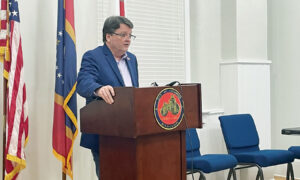
With the Columbus City Council poised to vote tonight on a proposed smoking ordinance, Ward 5 Councilman Kabir Karriem said he plans to ask the council to hold off, and instead call a public hearing on the matter.

The council meets at 5 p.m. in City Hall.

The ordinance, proposed by Ward 3 Councilman Charlie Box, bans smoking in “all enclosed public places,” including restaurants.

However, the ordinance, which largely is modeled after a Tennessee state law, allows smoking in “age-restricted venues,” or bars, restaurants and other establishments which only allow people age 21 or over to enter, and “private clubs,” which restrict access to the general public.

“I’m going to propose setting up a hearing to hear what the people want, just like we did with the liquor ordinance,” Karriem said Monday. “We need to get some public participation, before we decide, as a council, what direction we’re going to go in. I can’t vote on it, until I find out what the people of the city want.”

In addition to Box, Ward 2 Councilman Joseph Mickens and Ward 6 Councilman Bill Gavin earlier said they support the smoking ordinance.

Ward 4 Councilman Fred Stewart said Monday he had not decided whether he would vote for or against the proposed ordinance.

“I hadn’t made up my mind,” he said. “I’ve heard from a few constituents. Some are in favor, especially business places, and some are not in favor (of the ordinance). So far, the majority (of people from which I’ve heard) is in favor or it doesn’t matter to them either way.”

Ward 1 Councilman Gene Taylor, who earlier said he needed to read the ordinance, before deciding, could not be reached for comment for this story.

Columbus Mayor Robert Smith, who would cast a vote in the event of a 3-3 tie among councilmen, also could not be reached.

As written, the ordinance allows businesses with three or fewer employees to designate enclosed smoking rooms, inaccessible to the general public.

Additionally, exemptions are provided for “non-enclosed areas of public places, including, open-air patios, porches or decks.”

If the council approves the ordinance tonight, the ordinance wouldn’t go into effect until Dec. 22 or later.


Proposed ordinance

AN ORDINANCE OF THE CITY OF COLUMBUS, MISSISSIPPI, ENACTING AN ORDINANCE

BANNING AND/OR RESTRICTING SMOKING

KNOWN AS THE COLUMBUS, MISSISSIPPI

NON-SMOKER PROTECTION ACT

WHEREAS, scientific studies have found that tobacco smoke is a major contributor to indoor air pollution; and

WHEREAS, such scientific studies, including studies by the Surgeon General of the United States, have shown that breathing secondhand smoke poses a significant health hazard; and

WHEREAS, the Mayor and the City Council find and declare that the purposes of this ordinance are to protect the public health and to promote the general welfare of its citizens by prohibiting smoking in public places and places of employment; and

WHEREAS, the Mayor and the City Council find it in the best interest of the public health and welfare to provide a copy of the Smoking Ban Ordinance;

BE IT ORDAINED BY THE MAYOR AND CITY COUNCIL OF THE CITY OF COLUMBUS, MISSISSIPPI:

1. Short Title.

This Ordinance shall be known and may be cited as the "Columbus, Mississippi Non-Smoker Protection Act".

2. Definitions.

As used in this part, unless the context requires otherwise:

(1) "Acceptable form of identification" means:

(A) A state-issued driver license;

(B) A state-issued identification card;

(C) A valid passport; or

(D) A valid military identification card;

(2) "Age-restricted venue" means a legal establishment that affirmatively restricts access to its buildings or facilities at all times to persons who are twenty-one (21) years of age or older by requiring each person who attempts to gain entry to such buildings or facilities to submit for inspection an acceptable form of identification for the express purpose of determining if the person is twenty-one (21) years of age or older;

(3) "Employee" means a person who is employed by an employer in consideration for direct or indirect monetary wages or profit and a person who volunteers such person's services for a non-profit entity; and

(4) "Employer" means a person, business, partnership, association, corporation, including a municipal corporation, educational institution, trust, or non-profit entity that employs the services of one (1) or more individual persons;

(5) "Enclosed area" means all space between a floor and ceiling that is enclosed on all sides by solid walls or windows, exclusive of doorways, which extend from the floor to ceiling;

(6) "Health care facility" means an office or institution providing care or treatment of diseases, whether physical, mental, or emotional, or other medical, physiological, or psychological conditions. This definition shall include all waiting rooms, hallways, private rooms, semiprivate rooms, and wards within health care facilities;

(7) "Person" means an individual, partnership, committee, association, corporation or any other organization or group of persons;

(8) "Place of employment" means an enclosed area under the control of a public or private employer that employees normally frequent during the course of employment, including, but not limited to, work areas, private offices, employee lounges, restrooms, conference rooms, meeting rooms, classrooms, employee cafeterias, hallways, and vehicles. A private residence is not a "place of employment" unless it is used as a child care, adult day care, or health care facility;

(9) "Private club" means any club or organization that does not permit the general public access to its facilities or activities. Access is denied to anyone who does not agree or adhere to the rules of membership. In order to be considered a private club or organization for purposes of this part, the club or organization shall adhere to all of the following criteria:

(A) Have a permanent mechanism to carefully screen applicants for membership on subjective rather than objective factors;

(B) Limit access and use of facilities, services and activities of the organization to members and guests of the members;

(C) Be controlled by its membership and operate solely for the benefit and pleasure of its members; and

(D) Advertise exclusively and only to its members, excluding membership drives;

"Private club" also means any institution or organization that has received a determination of exemption from the Internal Revenue Service under United States Code 26 U.S.C. § 501(c)(19);

(10) "Public place" means an enclosed area to which the public is invited including, but not limited to, banks, educational facilities, health care facilities, hotel and motel lobbies, laundromats, public transportation facilities, reception areas, restaurants, retail food production and marketing establishments, recreational facilities, retail service establishments, retail stores, shopping malls, sports arenas, theaters, places of employment and waiting rooms;

(11) "Restaurant" means an eating establishment, including, but not limited to, coffee shops, cafeterias, sandwich stands, and private and public school cafeterias, which gives or offers for sale food to the public, guests, or employees, as well as kitchens and catering facilities in which food is prepared on the premises for serving elsewhere. The term "restaurant" shall include a bar area within the restaurant;

(12) "Retail tobacco store" means a retail store that derives its largest category of sales from tobacco products and accessories;

(13) "Service line" means an indoor line in which one (1) or more persons are waiting for or receiving service of any kind, whether or not the service involves the exchange of money;

(14) "Shopping mall" means an enclosed public walkway or hall area that serves to connect retail or professional establishments;

(15) "Smoking" means inhaling, exhaling, burning, or carrying any lighted cigar, cigarette, pipe, or other lighted tobacco or similar product in any manner or in any form; and

(16) "Sports arena" means sports pavilions, stadiums, gymnasiums, health spas, boxing arenas, swimming pools, roller and ice rinks, bowling alleys, and other similar places where members of the general public assemble to engage in physical exercise, participate in athletic competition, or witness sports or other events.

3. Smoking in Public Places.

(a) Smoking is prohibited in all enclosed public places within the City of Columbus including, but not limited to, the following places:

(1) Aquariums, galleries, libraries, and museums;

(2) Areas available to and customarily used by the general public in businesses and non-profit entities patronized by the public including, but not limited to, banks, laundromats, factories, professional offices, and retail service establishments;

(3) Child care and adult day care facilities;

(4) Convention facilities;

(5) Educational facilities, both public and private;

(6) Elevators;

(7) Health care facilities;

(8) Hotels and motels;

(9) Lobbies, hallways, and other common areas in apartment buildings, condominiums, trailer parks, retirement facilities, nursing homes, and other multiple-unit residential facilities;

(10) Polling places;

(11) Public and private transportation facilities, including trains, buses, taxicabs and airports under the authority of City or local governments, and ticket, boarding, and waiting areas of public transit depots;

(12) Restaurants;

(13) Restrooms, lobbies, reception areas, hallways, and other common-use areas;

(14) Retail stores;

(15) Rooms, chambers, places of meeting or public assembly, including school buildings, under the control of an agency, board, commission, committee or council of the City of Columbus or a political subdivision of the City and any Board, Commission, to the extent the place is subject to the jurisdiction of the City;

(16) Service lines;

(17) Shopping malls;

(18) Sports arenas, including enclosed public places in outdoor arenas; and

(19) Theaters and other facilities primarily used for exhibiting motion pictures, stage dramas, lectures, musical recitals, or other similar performances.

(b) This prohibition on smoking shall be communicated to all existing employees and to all prospective employees upon their application of employment.

4. Exemptions.

Notwithstanding any other provision of this part to the contrary, the following areas shall be exempt from the provisions of Paragraph 3 above:

(1) Age Restricted Venues;

(2) Areas attached to a non-smoking area if such areas meet all of the following restrictions:

(A) Is an Age-Restricted Venue;

(B) Is fully enclosed and fully separated from non-smoking parts of the premises via a solid wall with no wall penetrations, including windows and doors, between the non-smoking part of the premises and the smoking section;

(C) has entry and exit from the exterior of the building only, which entry and exits are solely used for entry and exit of said smoking area;

(D) has a separate ventilation system from the non-smoking area of the enclosure; and

(E) if the business premises has an HVAC system, the smoking area must have a separate HVAC system with no common duct-work or intake.

(3) Hotel and motel rooms that are rented to guests and are designated as smoking rooms; provided that no more than twenty-five percent (25%) of rooms rented to guests in a hotel or motel may be so designated. All smoking rooms on the same floor shall be contiguous and smoke from these rooms shall not infiltrate into areas where smoking is prohibited pursuant to the provisions of this part;

(4) All premises of any manufacturer, importer, or wholesaler of tobacco products, all premises of any tobacco leaf dealer or processor, and all tobacco storage facilities;

(5) Non-enclosed areas of public places, including:

(A) Open air patios, porches or decks;

(B) Any area enclosed by garage type doors on one (1) or more sides when all such doors are completely open; and

(C) Any area enclosed by tents or awnings with removable sides or vents when all such sides or vents are completely removed or open.

Smoke from such areas shall not infiltrate into areas where smoking is prohibited pursuant to the provisions of this part;

(6) Private businesses with three (3) or fewer employees where, in the discretion of the business owner, smoking may be allowed in an enclosed room not accessible to the general public. Smoke from such room shall not infiltrate into areas where smoking is prohibited pursuant to the provisions of this part;

(7) Private clubs; provided that such exemption shall not apply to any entity that is established solely for the purpose of avoiding compliance with this part;

(8) Private homes, private residences and private motor vehicles, unless such homes, residences and motor vehicles are being used for child care or day care or unless the private vehicle is being used for the public transportation of children or as part of health care or day care transportation;

(9) Retail tobacco stores that prohibit minors on their premises; and

(10) Commercial vehicles when such vehicle is occupied solely by the operator.

5. Signage.

"No Smoking" signs or the international "No Smoking" symbol, consisting of a pictorial representation of a burning cigarette enclosed in a red circle with a red bar across it, shall be clearly and conspicuously posted at every entrance to every public place and place of employment where smoking is prohibited by this part by the owner, operator, manager, or other person in control of that place.

6. Enforcement; Notice; Complaints; Inspections.

(a) The Chief of Police or his designee, shall have the power, subject to law, to enter upon the premises named in this ordinance to ascertain whether the premises are in compliance with this ordinance. Enforcement will be through issuance of a summons and complaint.

(b) Any person who desires to register a complaint under this ordinance may contact the City Police Department.

(c) Notice of the provisions of this Article shall be given to all applicants for a business license in the City of Columbus.

(d) The Health Department, Fire Department, Building Inspection Department, or their designees shall, while an establishment is undergoing otherwise mandated inspections, inspect for compliance with this Article.

(e) An owner, manager, operator, or employee of an establishment regulated by this part shall inform persons violating this part of the appropriate provisions thereof.

7. Violations; Penalties.

(a) A person who knowingly smokes in an area where smoking is prohibited by the provisions of this part shall be subject only to a civil penalty of fifty dollars ($50).

(b) A person who owns, manages, operates or otherwise controls any public place where smoking is prohibited pursuant to the provisions of this part and who knowingly fails to comply with any provision of this part shall be subject to the following:

(1) For a first violation in any twelve-month period, a written warning from the Police Department of the City of Columbus;

(2) For a second violation in any twelve-month period, a civil penalty of one hundred dollars ($100); and

(3) For a third or subsequent violation in any twelve-month period, a civil penalty of five hundred dollars ($500).

(4) The Mayor and City Council may suspend or revoke any business license or permit issued by the City for 3 or more violations of this ordinance involving the licensed premises within a twelve (12) month period.

(5) Violation of this Article is hereby declared to be a public nuisance, which may be abated by the Department of Health, Police Department or the Building Inspection Department by restraining order, preliminary and permanent injunction, or other means provided for by law, and the City may take action to recover the costs of the nuisance abatement.

(c) Each day on which a knowing violation of this part occurs shall be considered a separate and distinct violation.

8. Education and Information.

The City of Columbus acting through its various departments shall engage in a continuing program to explain and clarify the purposes and requirements of this part to all persons affected by the Non-Smoker Protection Act.

9. Local Operating Procedures.

The City of Columbus shall annually request other governmental and educational agencies to establish local operating procedures in cooperation and compliance with this part.

10. Construction of Part.

No provision of this part shall be construed to permit smoking where it is otherwise restricted by other applicable laws.

11. Effective Date.

This ordinance shall be in full force and effect immediately after final passage and approval by the Mayor and Council.

The foregoing ordinance was proposed in a motion by Council Member ______________, seconded by Council Member ______________, and after discussion, no council member having called for a reading, was brought to a vote as follows:

Council Member Taylor ________

Council Member Mickens ________

Council Member Box ________

Council Member Stewart ________

Council Member Karriem ________

Council Member Gavin ________

Whereupon, the motion having received a majority of affirmative votes, the Mayor declared that the Ordinance had been passed and adopted on this the ______ day of _________________, 2009.

CITY OF COLUMBUS, MISSISSIPPI

BY: ________________________________

ROBERT SMITH, MAYOR

ATTEST:

_____________________________________

SECRETARY / TREASURER

.

Kristin Mamrack is a staff reporter for The Commercial Dispatch.

back to top

The Dispatch is offering free classified ads in just about any classification to celebrate our redesign. Deadline is Thursday, February 11 at 5:00pm so contact us soon to place an ad. Click here for details

Reader Comments

22 reader comments
post a comment

Article Comment KJ | 11/17/2009 1:54:00 PM   mark as inappropriate
Just make it illegal already. Go for it. Criminalize it like marijuana. Control-freak cowards.

Article Comment Bob | 11/17/2009 1:55:00 PM   mark as inappropriate
You must realize that a well funded "war on smokers" is underway. Here's where it started:

http://www.rwjf.org/pr/product.jsp?ia=143&id=14912

And what the 99 million dollars was going to. Note on page seven the "inside -out", provision going for patios later, AFTER business owners spend thousands of dollars to build them to accommodate their smoking customers, clearly showing that the tobacco control activists have ABSOLUTLY NO CONCERN about local issues or businesses. You may need to CTRL and scoll to enlarge it.

http://www.no-smoke.org/pdf/CIA_Fundamentals.pdf

Here's the "model ban" from page eight that your lawmakers copied, printed, and passed. It's the "smoking ban for dummies" It only takes a few minutes to fill in the blanks naming your community, the administrators names, and blanks to customize it to your community.

http://www.no-smoke.org/document.php?id=229

Article Comment William | 11/17/2009 4:06:00 PM   mark as inappropriate
Bob,
Why do people that don't smoke have to put up with the stinch of smokers in resturants. Can you and your fellow smokers not refrain from smoking for 1 hour and not impose your nasty habit on others. Not to mention jeopardize the health of others with 2nd hand smoke. I work in the health care industry and see first hand what smoking does to a person as well as their families. If you knew what the real risk of smoking were I guarantee you or anyone else would take another drag. Listen up John Bean, I refuse to eat in resturant that allows smoking. If and when I eat out, I go to Starkville and Tupelo where elected official have voted yes to a smoking ban because they care about the people of their communities. Mr. Karriem it doesn't take a brain surgeon or a public hearing to figure out what is best for the community. Haven't you heard Smoking is BAD for everyone. There is no research that has found smoking benificial to one's health.

Article Comment William | 11/17/2009 4:23:00 PM   mark as inappropriate
Bob,
You forgot to include some very important information on the 2nd website in your posted. So I have taken the time to copy and paste them. Mr. Karriem and the rest of the City Council members please take the time and do your research.

Numerous studies have found that tobacco smoke is a major contributor to indoor air pollution, and that breathing secondhand smoke (also known as environmental tobacco smoke) is a cause of disease in healthy nonsmokers, including heart disease, stroke, respiratory disease, and lung cancer. The National Cancer Institute determined in 1999 that secondhand smoke is responsible for the early deaths of approximately 53,000 Americans annually. (National Cancer Institute (NCI), "Health effects of exposure to environmental tobacco smoke: the report of the California Environmental Protection Agency. Smoking and Tobacco Control Monograph 10," Bethesda, MD: National Institutes of Health, National Cancer Institute (NCI), August 1999.)

The Public Health Service's National Toxicology Program (NTP) has listed secondhand smoke as a known carcinogen. (Environmental Health Information Service (EHIS), "Environmental tobacco smoke: first listed in the Ninth Report on Carcinogens," U.S. Department of Health and Human Services (DHHS), Public Health Service, NTP, 2000; reaffirmed by the NTP in subsequent reports on carcinogens, 2003, 2005.)

Based on a finding by the California Environmental Protection Agency in 2005, the California Air Resources Board has determined that secondhand smoke is a toxic air contaminant, finding that exposure to secondhand smoke has serious health effects, including low birth-weight babies; sudden infant death syndrome (SIDS); increased respiratory infections in children; asthma in children and adults; lung cancer, sinus cancer, and breast cancer in younger, premenopausal women; heart disease; and death. (Appendix II Findings of the Scientific Review Panel: Findings of the Scientific Review Panel on Proposed Identification of Environmental Tobacco Smoke as a Toxic Air Contaminant as adopted at the Panel's June 24, 2005 Meeting," California Air Resources Board (ARB), September 12, 2005.)

Scientific evidence has firmly established that there is no safe level of exposure to second-hand tobacco smoke, a pollutant that causes serious illness in adults and children. There is also indisputable evidence that implementing 100% smoke-free environments is the only effective way to protect the population from the harmful effects of exposure to secondhand smoke. (World Health Organization (WHO), "Protection from exposure to secondhand smoke: policy recommendations," World Health Organization (WHO), 2007.)

A study of hospital admissions for acute myocardial infarction in Helena, Montana before, during, and after a local law eliminating smoking in workplaces and public places was in effect, has determined that laws to enforce smokefree workplaces and public places may be associated with a reduction in morbidity from heart disease. (Sargent, Richard P.; Shepard, Robert M.; Glantz, Stanton A., "Reduced incidence of admissions for myocardial infarction associated with public smoking ban: before and after study," British Medical Journal 328: 977-980, April 24, 2004.) Similar studies have been conducted in Bowling Green, Ohio; Monroe County, Indiana; Pueblo, Colorado; New York State; France; Greece; Italy; and Scotland. All of these studies have reached the conclusion that communities see an immediate reduction in heart attack admissions after the implementation of comprehensive smokefree laws. ([n.a.], "Bibliography of Secondhand Smoke Studies." American Nonsmokers' Rights Foundation, February 26, 2008.)

A significant amount of secondhand smoke exposure occurs in the workplace. Employees who work in smoke-filled businesses suffer a 25-50% higher risk of heart attack and higher rates of death from cardiovascular disease and cancer, as well as increased acute respiratory disease and measurable decrease in lung function. (Pitsavos, C.; Panagiotakos, D.B.; Chrysohoou, C.; Skoumas, J.; Tzioumis, K.; Stefanadis, C.; Toutouzas, P., "Association between exposure to environmental tobacco smoke and the development of acute coronary syndromes: the CARDIO2000 case-control study," Tobacco Control 11(3): 220-225, September 2002.)

Studies measuring cotinine (metabolized nicotine) and NNAL (metabolized nitrosamine NNK, a tobacco-specific carcinogen linked to lung cancer) in hospitality workers find dramatic reductions in the levels of these biomarkers after a smokefree law takes effect. Average cotinine levels of New York City restaurant and bar workers decreased by 85% after the city's smokefree law went into effect. ([n.a.], "The State of Smoke-Free New York City: A One Year Review," New York City Department of Finance, New York City Department of Health & Mental Hygiene, New York City Department of Small Business Services, New York City Economic Development Corporation, March 2004). After the implementation of Ontario, Canada's Smokefree Indoor Air Law, levels of NNAL were reduced by 52% in nonsmoking casino employees and cotinine levels fell by 98%. (Geoffrey T. Fong, et. al., "The Impact of the Smoke-Free Ontario Act on Air Quality and Biomarkers of Exposure in Casinos: A Quasi-Experimental Study," Ontario Tobacco Control Conference, Niagara Falls, Ontario, December 2, 2006.)

Following a Health Hazard Evaluation of Las Vegas casino employees' secondhand smoke exposure in the workplace, which included indoor air quality tests and biomarker assessments, the National Institute of Occupational Safety & Health (NIOSH) concluded that the casino employees are exposed to dangerous levels of secondhand smoke at work and that their bodies absorb high levels of tobacco-specific chemicals NNK and cotinine during work shifts. NIOSH also concluded that the "best means of eliminating workplace exposure to [secondhand smoke] is to ban all smoking in the casinos." (Health hazard evaluation report: environmental and biological assessment of environmental tobacco smoke exposure among casino dealers, Las Vegas, NV. By Achutan C, West C, Mueller C, Boudreau Y, Mead K. Cincinnati, OH: U.S. Department of Health and Human Services, Centers for Disease Control and Prevention, National Institute for Occupational Safety and Health, NIOSH HETA No. 2005-0076 and 2005-0201-3080, May 2009.)

Secondhand smoke is particularly hazardous to elderly people, individuals with cardiovascular disease, and individuals with impaired respiratory function, including asthmatics and those with obstructive airway disease. (California Environmental Protection Agency (Cal EPA), "Health effects of exposure to environmental tobacco smoke", Tobacco Control 6(4): 346-353, Winter, 1997.) The Americans With Disabilities Act, which requires that disabled persons have access to public places and workplaces, deems impaired respiratory function to be a disability. (Daynard, R.A., "Environmental tobacco smoke and the Americans with Disabilities Act," Nonsmokers' Voice 15(1): 8-9.)

The U.S. Centers for Disease Control and Prevention has determined that the risk of acute myocardial infarction and coronary heart disease associated with exposure to tobacco smoke is non-linear at low doses, increasing rapidly with relatively small doses such as those received from secondhand smoke or actively smoking one or two cigarettes a day, and has warned that all patients at increased risk of coronary heart disease or with known coronary artery disease should avoid all indoor environments that permit smoking. (Pechacek, Terry F.; Babb, Stephen, "Commentary: How acute and reversible are the cardiovascular risks of secondhand smoke?" British Medical Journal 328: 980-983, April 24, 2004.)

Given the fact that there is no safe level of exposure to secondhand smoke, the American Society of Heating, Refrigerating and Air Conditioning Engineers (ASHRAE) bases its ventilation standards on totally smokefree environments. ASHRAE has determined that there is currently no air filtration or other ventilation technology that can completely eliminate all the carcinogenic components in secondhand smoke and the health risks caused by secondhand smoke exposure, and recommends that indoor environments be smokefree in their entirety. (Samet, J.; Bohanon, Jr., H.R.; Coultas, D.B.; Houston, T.P.; Persily, A.K.; Schoen, L.J.; Spengler, J.; Callaway, C.A., "ASHRAE position document on environmental tobacco smoke," American Society of Heating, Refrigerating and Air-Conditioning Engineers (ASHRAE), 2005.)

During periods of active smoking, peak and average outdoor tobacco smoke (OTS) levels measured in outdoor cafes and restaurant and bar patios near smokers rival indoor tobacco smoke concentrations. (Klepeis, N.; Ott, W.R.; Switzer, P., "Real-time measurement of outdoor tobacco smoke particles," Journal of the Air & Waste Management Association 57: 522-534, 2007.)

Residual tobacco contamination, or "thirdhand smoke," from cigarettes, cigars, and other tobacco products is left behind after smoking occurs and builds up on surfaces and furnishings. This residue can linger in spaces long after smoking has ceased and continue to expose people to tobacco toxins. Sticky, highly toxic particulate matter, including nicotine, can cling to walls and ceilings. Gases can be absorbed into carpets, draperies, and other upholsteries, and then be reemitted (off-gassed) back into the air and recombine to form harmful compounds. (Singer, B.C.; Hodgson, A.T.; Nazaroff, W.W., "Effect of sorption on exposures to organic gases from environmental tobacco smoke (ETS)," Proceedings: Indoor Air 2002, 2002.) Tobacco residue is noticeably present in dust throughout places where smoking has occurred. (Matt, G.E.; Quintana, P.J.E.; Hovell, M.F.; Bernert, J.T.; Song, S.; Novianti, N.; Juarez, T.; Floro, J.; Gehrman, C.; Garcia, M.; Larson, S., "Households contaminated by environmental tobacco smoke: sources of infant exposures," Tobacco Control 13(1): 29-37, March 2004.)

Unregulated high-tech smoking devices, commonly referred to as electronic cigarettes, or "e-cigarettes," closely resemble and purposefully mimic the act of smoking by having users inhale vaporized liquid nicotine created by heat through an electronic ignition system. After testing a number of e-cigarettes from two leading manufacturers, the Food and Drug Administration (FDA) determined that various samples tested contained not only nicotine but also detectable levels of known carcinogens and toxic chemicals, including tobacco-specific nitrosamines and diethylene glycol, a toxic chemical used in antifreeze. The FDA's testing also suggested that "quality control processes used to manufacture these products are inconsistent or non-existent." ([n.a.], "Summary of results: laboratory analysis of electronic cigarettes conducted by FDA," Food and Drug Administration (FDA), July 22, 2009; http://www.fda.gov/NewsEvents/PublicHealthFocus/ucm173146.htm Accessed on: October 22, 2009) E-cigarettes produce a vapor of undetermined and potentially harmful substances, which may appear similar to the smoke emitted by traditional tobacco products. Their use in workplaces and public places where smoking of traditional tobacco products is prohibited creates concern and confusion and leads to difficulties in enforcing the smoking prohibitions.

The Society of Actuaries has determined that secondhand smoke costs the U.S. economy roughly $10 billion a year: $5 billion in estimated medical costs associated with secondhand smoke exposure and $4.6 billion in lost productivity. (Behan, D.F.; Eriksen, M.P.; Lin, Y., "Economic Effects of Environmental Tobacco Smoke," Society of Actuaries, March 31, 2005.)

Numerous economic analyses examining restaurant and hotel receipts and controlling for economic variables have shown either no difference or a positive economic impact after enactment of laws requiring workplaces to be smokefree. Creation of smokefree workplaces is sound economic policy and provides the maximum level of employee health and safety. (Glantz, S.A. & Smith, L. The effect of ordinances requiring smokefree restaurants on restaurant sales in the United States. American Journal of Public Health, 87:1687-1693, 1997; Colman, R.; Urbonas, C.M., "The economic impact of smoke-free workplaces: an assessment for Nova Scotia, prepared for Tobacco Control Unit, Nova Scotia Department of Health," GPI Atlantic, September 2001.)

Hundreds of communities in the U.S., plus numerous states, including Arizona, Delaware, Illinois, Iowa, Massachusetts, New Jersey, New York, Ohio, Utah, and Washington, have enacted laws requiring all workplaces, restaurants, bars, and other public places to be smokefree, as have numerous countries, including Bhutan, France, Iceland, Ireland, New Zealand, Norway, Singapore, Uruguay, and the United Kingdom constituent countries of England, Northern Ireland, Scotland, and Wales.

There is no legal or constitutional "right to smoke." Business owners have no legal or constitutional right to expose their employees and customers to the toxic chemicals in secondhand smoke. On the contrary, employers have a common law duty to provide their workers with a workplace that is not unreasonably dangerous.

Smoking is a potential cause of fires; cigarette and cigar burns and ash stains on merchandise and fixtures causes economic damage to businesses. ("The high price of cigarette smoking," Business & Health 15(8), Supplement A: 6-9, August 1997.)

The smoking of tobacco is a form of air pollution, a positive danger to health, and a material public nuisance.

Article Comment Sarah | 11/17/2009 4:40:00 PM   mark as inappropriate
http://health.msn.com/health-topics/articlepage.aspx?cp-documentid=100249331>1=31036

From the article:
"Eight of the 10 bottom-ranked states are from the south, with Mississippi coming in dead last for the ninth consecutive year. Mississippi has a sky-high death rate from heart disease and high infant mortality. In general, residents of these states are more likely to be smokers or to be obese, the report found."

"UnitedHealth Group Executive Vice President Dr. Reed Tuckson says the report is meant to draw attention to public health issues, particularly the twin challenges of smoking and obesity."

If the Columbus city council members are trying to pass ordinances that will help make this state healthier, then there is absolutely no reason not to support it. If you are a smoker..this ordinance more than allows you to smoke in public places where you are not around children/teenagers/those who would prefer to stay away from smoke. It is more than fair.

Article Comment Gene | 11/17/2009 4:49:00 PM   mark as inappropriate
"Bob" forgets a lot of things, William. He's a spammer, otherwise known as "generalsn." (Google his text.)

His misleading boilerplate despoils every smoking-related message board in the country.

This anonymous, unconscionable Spam King seeks to "enlighten" all the poor, ignorant souls in Mississippi with his wisdom(!)

He's a bit of a troll, but your response anyway was great! Nicely done!

Article Comment me | 11/17/2009 5:28:00 PM   mark as inappropriate
Ban smoking in ALL public places.

People should be allowed the freedom to be in public places (including Open air patios, porches or decks..and within so many feet of an entrance) without having to risk their health due to someones unhealthy habits. Smokers still have the right to kill themselves in non-public places. Why are you so afraid of stepping on someones toes? this is about health.....

did you read about MS being the unhealthiest state for the 9th year running??? http://health.yahoo.com/featured/67/the-healthiest-and-unhealthiest-states/
"Residence in MS are more likely to be smokers"
Banning smoking in all public places is not only healthier for everyone but it also helps eliminate the exposure for children who see smokers and might one day begin themselves.

Do something about it for once!...starkville did and they are growing...faster than columbus!

COLUMBUS DO YOUR PART IN MAKING COLUMBUS A HEALTHER STATE....

BAN SMOKING IN ALL PUBLIC PLACES!!!

Article Comment Greg | 11/17/2009 6:04:00 PM   mark as inappropriate
Don't waste the councils time by postponing the vote. Just vote on it. I think Karriem is worried about getting reelected so he wants to put blame on the public when he casts his vote. Vote "YES" and help make this a better city for everyone.

Article Comment Sheldon Bowen | 11/17/2009 8:02:00 PM   mark as inappropriate
My American Legiion in Aberdeen has banned smoking in the building. I also go to the American Legion in Columbus, and it is a stinking irrateable mess. Smoking needs banned. It provides nothing but a horible stinking habit that we, the people from other cities, have to put up with when we make Columbus our shopping destination. Come on aldermen. Act grown up and stop the smoking. You have the power. Do you have the brains? Certainly hope so. Then I can continue shopping in Columbus. Without it, I will stop coming to your city altogether. Please, for health sakes, and other peoples right to enjoy themselves, do away with smoing. Thank you-and have a happy day.

Article Comment GGClark | 11/17/2009 10:16:00 PM   mark as inappropriate
I thought Kariem smoked Crack...what's he worried about cigs for?

Article Comment TD | 11/17/2009 10:36:00 PM   mark as inappropriate
I don't smoke. I hate the smell of smoke. BUT

This should be a free-market decision not a government decision.

Individual business owners can permit or prohitib smoking in their businesses. As a non-smoker, those are the places I should patronize.

Government is too intrusive on every level. Here is a great example on the local level.

Article Comment Bill | 11/18/2009 7:19:00 AM   mark as inappropriate
I agree with TD, Individuals should decide for themselves and make that decission know through their wallet. What is really needed is protection for those that can't protect themselves, children. Allow a business to decide to or not to ban smoking, but if they don't, then they should be required to only allow persons over 21 to enter. as it is put more teeth in the ban, add another zero to the fines for 2nd and 3rg violations.

Article Comment Fred | 11/18/2009 8:43:00 AM   mark as inappropriate
@GGclark

I think you are thinking of Kamal Karriem.

Article Comment LS | 11/18/2009 9:59:00 AM   mark as inappropriate
Why is Columbus so relunctant to pass a no smoking policy?? You say you want to have a hearing to see what the public wants....Karriem, you represent the public...That's why folks in your district trusted you and elected you to speak for them. Holding a public hearing is like telling them you can't make a decission. Progressive cities and towns already have bans on smoking. Get with the program. I know we live in America where individual rights are important, but in this case (damaging the health of others) Societies rights are more important. Ban smoking!

Article Comment gogetum | 11/18/2009 11:04:00 AM   mark as inappropriate
I sure thought Karriem had more backbone than that, didn't you? Disappointment runs in the family , so they say. Hope he isn't taking up where his bro. left off for sure. He just needs to suck it up and do what is right about this thing. There isn't any room for pussyfooting around when it comes to the health and safety of his constitutes. Mature adults don't have to labor about how to vote on this one. Won't vote for him again either. Sure has put a dent in his Mayor posibilities. However, Mr. Smith seems to be reluctant too. So no more voting for him either. Lord, give us a mature canditate with backbone in our next election, maybe a Mr. Box . He sure has the guts to make a stand for what's best for the whole city , so if he runs ---he has my vote.

Article Comment walter | 11/19/2009 11:35:00 AM   mark as inappropriate
An elected-official is never wrong for eliciting the wishes of his constituents! Regardless of the final outcome, I am proud of the fact that the 5th's representative respects the citizens within his district enough to request that they be given sufficint time to consider the matter.

Truth be told, the production, distribution and use of tobacco products is a matter that has long been neglected by the national government. Massive amount of data tracking illnesses and deaths have already been compiled to prove that it is a major health issue.

Isn't one of the primary purpose of the national government is the health and welfare of the people? Why are local governments even being forced to deal with the matter? How many millions of dollars in attorney fees were paid in the tobacco lawsuit? Didn't the people, through the office of the Attorney General , pay a lot to bring the case? Why was the matter left unfinished?

We have misplaced priorities, brothers and sisters. The ones who suffer the most, as a result, are younger generatins and those not yet born.

Article Comment gogetum | 11/19/2009 3:17:00 PM   mark as inappropriate
If that be your stand , bro. walter, surely you think Obama should just give up on the healthcare he's trying to cram down your throat, right? Since the majority of his constituents don't want it and are happy with what they presently have. Don't change your stand , be consistant now.
FYI It's called a ward in the city, I think it's ward 5 that Karriem represents. What's your openion on the mayor's reluctance? I think both are thinking about votes and not health hazards.

Article Comment walter | 11/20/2009 3:53:00 PM   mark as inappropriate
Ward or district, Gogetum. Opinion is spelled, OPINION. The operative word, I submit, is constituents, Gogetum. As far as President Obama's efforts to enact Health INSURANCE Reform, neither yourself, nor a thousand polls commissioned by special interests, could ever persuade me that informed and competent Americans are satisfied with the status quo: steadily increasing premiums and deductions; pre-existing illnesses clauses; limitation of services, etc. No. President Obama shouldn't give up on attempting to educate the public and introducing a REAL public option to the bill being debated.

Mayor Robert Smith has responded exactly the way an intelligent, fair-minded and wise person should, in the position he holds, as mayor. The role of the mayor is to vote, in the event there is a tie. To express his position before the council even votes would amount to a derelict of duty. Worse! He would be in violation of the law! To publicly express his opinion, is tantamount to casting a vote. Unlike other elected-officials, locally and nationally, whose role, as defined by law, is to cast the deciding vote, Columbus' wise and public-spirited mayor fully appreciates the significance of the law and has, as he always does, opted to obey the law.

If you want to know my humble opinion, I think they're both highly-qualified for their respective offices and are doing a fantastic job serving the citizens of Columbus. I sincerely hope and pray that the majority of the people realize just how bless they are to have the two of them representing you.

Naysayers, aside, Councilman Karriem has not stated that he would vote for or against a ban; Mayor Smith, as required by law, has refrained from publicly stating his position, too. As Councilman, Karriem desires only to respect those he represents by demanding that they be afforded the opportunity to weigh-in on how they feel. That's good leadership/representation, I think. As long as they both continue to giv the public their best and respect those who elected them, neither need ever worry about winning in any fair election anytime within the near or distant future.

As to how the Ward that Councilman Karriem represents will vote, I will offer my observations, since I'm not an elected-official; do not seek office and will not serve, if elected: The people of the 5th are no less intelligent or informed about health issues and other issues impacting their lives than are citizens of Columbus' other Wards. They appreciate the hazards associated with smoking--direct and second-hand--and also know the costs, in terms of lost revenue. quality of life and life, itself. I believe and do hope they'll vote affirmatively. Most people who are aware feel that way, I would think. The reason I admire and respect the Ward's dedicated representative so much is that he is willing, no insists upon giving the people the opportunity voice their opinions. For such, he is to be commended, not attacked by shallow persons with ulterior motives of their own.

Karriem is a member of a very distinguished family based in Columbus, Lowndes County. He knows that in the history of our home-town, far too many elected-officials never even considered our opinions about anything. They didn't really even consider us, period. This being a brand new day, Karriem, The Mayor and at least one other elected person within the county have wisely chosen to be more considerate and respectful of those who bestowed upon the great honor of serving them.

Sorry, for taking so long to answer. But, for some reason, your name was a challenge to me to be as thorough and meticulous in answering as possible. I apologize to Mr. Imes and The Dispatch for consuming so much space answering.

Briefly, for those who would point a finger at Karriem's brother, be careful. None of us knows precisely what our future entails. Farthermore, the American Medical Association has repeatedly classified hsi condition as a illness. Whether you agree, or not, the A.M.A. has been charged with the responsibility of deciding on an issue, such as that. I accept their decision and trust that they have had the requisite training to make the determination as to what is or isn't a illness. One day, perhaps, our judicial and legislative bodies, national and locally, will catch up, forego pursuing their private vested interest in maintaining the status quo and yield for the greater good of families, and society, in general.

I pray that Kamal and all others still suffering will find healing and join the battle to defeat demagogues who selfishly exploit, what is in essence, a disability of the spirit. For me, it was one of impatience. Now, I know that God Will produce the change and I have every reason to believe, it will be sooner, rather than later.

Article Comment gogetum | 11/20/2009 4:34:00 PM   mark as inappropriate
Bigg defferance en ward and district. Now, what's your openion on the mayor's little tantrum at the supes meeting? Surely you don;t thank that wuz intelligent, fairminded and wise. Disapointed a lot of folks , right?

Article Comment Thom Geiger | 11/20/2009 4:34:00 PM   mark as inappropriate
A correction or two;
The topic of a smoking ban came up in the televised mayoral election forums and Robert, who was the sitting mayor at the time, stated he felt business owners should decide whether or not to ban smoking in their businesses. The video of that forum is on the internet.
I don't believe it is a violation of law to express an opinion of laws or ordinances before they are passed. If that were the case, laws couldn't be passed because proponents of proposed legislation are, by the act of submitting said legislation, in support of same.

Article Comment observer2 | 11/20/2009 7:19:00 PM   mark as inappropriate
I think the Gogetum comment hit the nail on the head. Disappointment for sure. Especially, since the Mayor likes the 4 day a week mind set. What a nerve. People aren't that blind. If he had the city working on Fridays and then couldn't hack it , we'd probably understand a plea for help but how about some tact in dealing with other people in the government. Especially when the whole state is watching.

Article Comment melody | 11/20/2009 7:34:00 PM   mark as inappropriate
Shame on you Mr. Walter--your race card is showing. Health hazards need to be handled for the good of the people and shouldn't be hum hoeing around trying to look at the "speical interest" opinions before making a decision. Control is good when it is for the good health of everybody. GET it done already!

post a comment

Your name:
Your email:
Your comment:

Sorry, we need to make sure you are a human:

Article comments on cdispatch.com are unmoderated. We ask that inappropriate comments not be posted on this website. If a comment is marked by another user as inappropriate, that comment will be removed from the site until it can be reviewed.

IP addresses are logged, and misuse of this feature will result in your being banned from the comments section.


Most Viewed News Stories
1. Couple attacked with knife, hammer in home; suspect could be escaped inmate Columbus & Lowndes County
2. Taggers spray-paint more than a dozen cars in downtown Columbus Columbus & Lowndes County
3. Starting over: Columbus family that lost everything in fire counts blessings Columbus & Lowndes County
4. Fire strikes townhouse apartment; no one injured Columbus & Lowndes County
5. Catfish in the Alley 2010 Photos & Video Columbus & Lowndes County

more popular content | the big page


The Dispatch on Facebook